




Wood, vinyl, and aluminum are the three most common fence materials we install across Miami-Dade County, and each one performs differently once you factor in South Florida’s specific conditions: year-round humidity, termites, salt air, and hurricane season. Here’s how they actually compare, and which one makes sense for your property.
Wood Fencing in South Florida
Wood is usually the cheapest option upfront, and it still gives the classic, warm look a lot of homeowners want for a backyard privacy fence. The tradeoff is maintenance. South Florida’s humidity and subterranean termite activity are hard on wood over time, even pressure-treated lumber. Posts set in the ground are the first thing to show wear, since that’s where moisture sits longest. Expect to stain or seal a wood fence every one to two years to keep it protected, and plan on board replacement becoming more frequent as the fence ages.
Cedar holds up better than pine against rot, but costs more. Either way, wood typically lasts 15 to 20 years in this climate with regular upkeep, less if it’s neglected.
See our wood fence installation page for styles and options.
Vinyl Fencing in South Florida
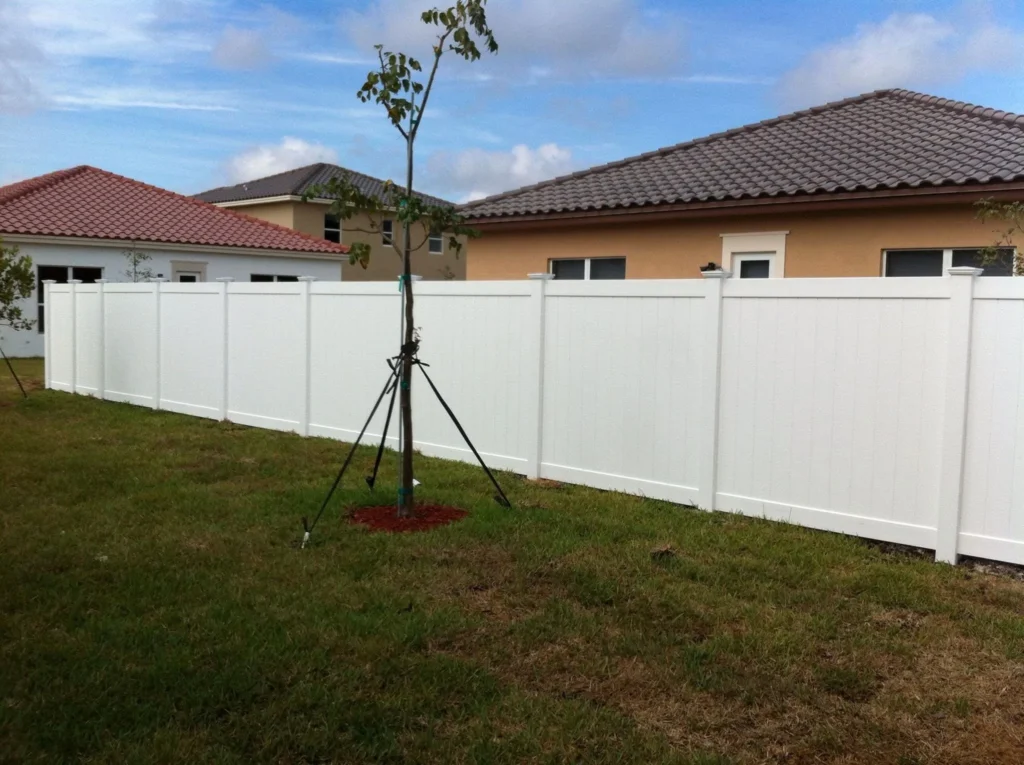
Vinyl costs more than wood upfront but nothing to rot, and nothing termites can eat. It’s inert to Miami’s humidity in a way wood simply isn’t, which is why it typically outlasts wood by a wide margin, often 25 to 30 years with essentially no maintenance beyond an occasional hose down. Over the life of the fence, that maintenance gap usually makes vinyl the cheaper option in total cost of ownership, even though the initial price is higher.
The one thing worth knowing about vinyl in a hurricane-prone area is that solid privacy panels don’t let wind pass through, so they take the full force of a storm the way a sail does. A well-installed vinyl fence with proper post depth and quality hardware holds up fine in typical South Florida weather, but it’s a real engineering tradeoff compared to a more open material.
See our vinyl fence installation page for panel styles and colors.
Aluminum Fencing in South Florida
Aluminum has no iron content, so it doesn’t rust, and its open picket design lets wind pass through rather than push against it, which generally makes it perform better structurally in sustained high winds than a solid panel fence. That combination, plus a powder-coated finish that holds up well, is why aluminum is the standard material for pool enclosures and front yards across Miami-Dade.
Living this close to the coast, salt air can still affect aluminum over time, mainly at joints, welds, or anywhere the powder coating gets scratched. Rinsing the fence periodically helps prevent salt buildup, especially the closer you are to the water. Aluminum typically lasts 40 to 50 years with minimal maintenance, but it’s an open style fence, not a privacy fence, so it’s the wrong choice if blocking sightlines is the goal.
See our aluminum fence installation page, or our pool fence installation page since aluminum is our most common pool barrier material.
What About Chain Link?
Chain link is the most affordable and lowest maintenance option of any material we install, and its open design makes it the most wind-permeable choice in a storm. It won’t rot, rust easily when galvanized, or need staining. The obvious tradeoff is privacy and appearance, chain link offers neither unless you add privacy slats, and it’s the material most likely to be restricted by an HOA, particularly in front yards. It remains a strong, practical choice for side yards, dog runs, and commercial or utility fencing where cost and durability matter more than curb appeal.
See our chain link fence installation page for details.
Side by Side Comparison
| Wood | Vinyl | Aluminum | Chain Link | |
|---|---|---|---|---|
| Typical lifespan | 15 to 20 years | 25 to 30 years | 40 to 50 years | 20+ years |
| Maintenance | Stain or seal every 1 to 2 years | Occasional wash | Occasional rinse near the coast | Virtually none |
| Humidity and termite resistance | Vulnerable, especially at posts | Fully resistant | Fully resistant | Fully resistant |
| Wind performance | Moderate, depends on construction | Solid panels resist less wind pass-through | Open design, wind passes through | Most wind-permeable |
| Privacy | High | High | Low, open sightlines | Low unless slatted |
| HOA approval | Usually approved | Usually approved | Usually approved | Often restricted, especially in front yards |
Which Should You Choose?
- Want backyard privacy and don’t mind upkeep: wood gives you the classic look at the lowest upfront cost
- Want privacy without the maintenance: vinyl costs more up front but typically costs less over the life of the fence
- Fencing a pool or front yard where you want visibility: aluminum is the standard choice for a reason, rust-proof, low-maintenance, and built for open sightlines
- Fencing a side yard, dog run, or job site on a budget: chain link is hard to beat for durability per dollar
Frequently Asked Questions
Which lasts longer in South Florida’s humidity, wood, vinyl, or aluminum?
Aluminum and vinyl both significantly outlast wood in this climate since neither one can rot or be eaten by termites. Aluminum typically lasts the longest overall, 40 to 50 years, followed by vinyl at 25 to 30 years, with wood generally needing replacement or significant repair within 15 to 20 years even with regular maintenance.
Is wood cheaper than vinyl in the long run?
Usually not. Wood costs less upfront, but factoring in staining or sealing every year or two, plus board replacement as the fence ages, most homeowners find vinyl costs less over a 15 to 20 year ownership period even though the initial price is higher.
Can a vinyl or aluminum fence handle hurricane force winds?
Both can hold up well when properly installed with adequate post depth and quality hardware. Aluminum’s open picket design lets wind pass through rather than push against it, which is generally an advantage in sustained high wind compared to a solid vinyl panel. Installation quality matters as much as material choice here.
Does aluminum fencing rust or corrode from salt air?
Aluminum itself doesn’t rust since it contains no iron, but salt can still build up on the powder-coated finish over time, especially close to the coast. Rinsing the fence periodically helps prevent that buildup from affecting the finish at joints and welds.
Which fence material is easiest to get approved by an HOA?
Vinyl, aluminum, and wood are all commonly approved by HOAs across Miami-Dade, though some communities have specific color or style requirements. Chain link is the material most often restricted, particularly for front yards, so check your HOA guidelines before choosing it.
Is chain link or wood better for keeping termites away?
Chain link, since it’s metal, there’s nothing for termites to eat. Wood is the only one of these materials at real risk from termite activity, which is common throughout South Florida.
Not Sure Which Fence Is Right for You?
Tell us about your property and what you’re trying to solve for, privacy, a pool barrier, budget, or low maintenance, and we’ll recommend the right material and send a free, written estimate.